
Protais Muhirwa
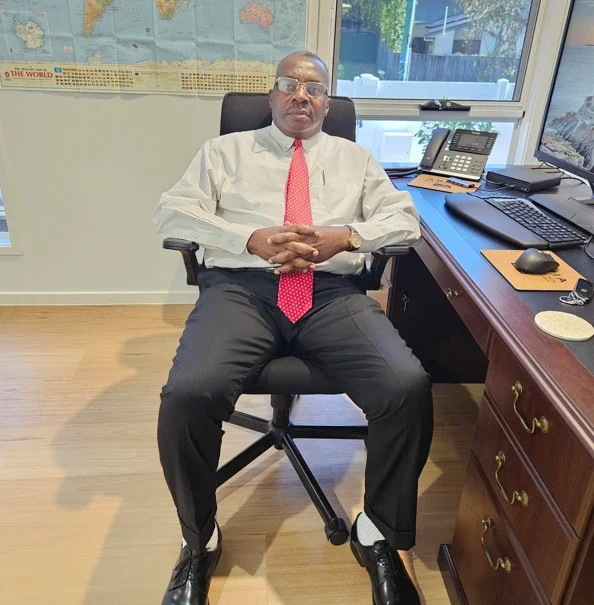
Protais Muhirwa: Transforming Settlement Into Sustainable Empowerment Through ARMIA
Protais Muhirwa is a visionary community development leader and the Founding Director of ARMIA, a Queensland-based organization focused on transforming post-settlement support for refugees, migrants, and disadvantaged Australians through holistic empowerment and workforce participation.
He leads with a mission centered on dignity, integration, and sustainable independence for people who have fallen through the gaps after initial settlement, building ARMIA into a practical hub for skills, counseling, and employment outcomes in Southeast Queensland. His leadership blends faith-guided service and strategic execution, positioning ARMIA as a catalyst for long-term socio-economic participation rather than welfare dependency.
Founding Vision
ARMIA Active Refugee & Migrant Integration in Australia), was established on January 26, 2015, in Sunnybank, Queensland, rooted in the simple conviction to act wherever a need is seen and to empower people to thrive beyond survival, not remain trapped on the margins of society. The founding idea was shaped by the paradox he observed in Australia, where capable individuals, years past arrival, remained on welfare and socially isolated, which demanded a model that tackled chronic unemployment, underemployment, and cultural barriers head-on.
The ARMIA Model
ARMIA operates as a Multicultural Family Support Hub that bridges the gap between settlement and real socio-economic participation using education, training, counseling, and job pathways as integrated levers of change. The organization’s person-centered framework links individuals to workforce opportunities and entrepreneurship support while combating isolation through community engagement and culturally competent services.
While founded to serve refugees and migrants, ARMIA expanded in 2018 and 2019 to include mainstream disadvantaged Australians, Indigenous communities, people with disabilities under NDIS, and the elderly through in-home care, reflecting a philosophy of inclusive integration. Then the organization name changed to ARMIA Healing the Incurables. This widening remit is supported by partnerships, volunteers, and social enterprises that reinforce both service reach and financial resilience over time.
Social Enterprise Leadership
ARMIA integrates social enterprise into its model, such as community-focused initiatives like L’ Oasis Café Bar and Restaurant that create training and employment platforms while reducing social isolation in practical settings. The approach helps buffer funding volatility and anchors a learning by doing pipeline that moves people from training into real work with supervision and community support.
From South Africa To Australia
Before launching ARMIA, Muhirwa led Misericordia International Centre in South Africa, where he witnessed thousands of refugees transition from hopelessness to careers in fields such as medicine, law, business, and academia, a precedent that inspired his Australian blueprint. That legacy grounded his commitment to replicable transformation with high expectations for personal progress and community contribution in new contexts.
Two principles animate his leadership ethos: act when there is need and build self-sufficiency rather than dependency, a synthesis reflected in ARMIA’s pedagogy of training to empowerment and employment. He frames leadership as service fused with long-horizon thinking, where outcomes endure beyond funding cycles and where teams are chosen for shared passion and resilience.
Education And Expertise
Muhirwa holds a Master of Science from Tashkent University and completed advanced courses in Human Resource Management and International Issues in Community Development at the University of Queensland, which inform his competencies in change management and policy implementation. His background includes experience in team leadership and community-centered organizational development in Australia and abroad, adding operational depth to ARMIA’s model.
ARMIA’s impact appears in the shift from isolation to engagement, with individuals entering and remaining in the workforce, building businesses, and integrating into civic life through supported networks and tailored development plans. The hub’s holistic structure reduces mental health stressors tied to long-term underemployment while offering pathways that align skills, culture, and market demand.
Recognition And Visibility
Muhirwa’s work has been profiled by business and leadership outlets that spotlight his purpose-driven approach and organizational innovations that seek long-term sustainability in community services. Public platforms and awards recognize ARMIA’s empowerment lens and its standing as a voice for migrants and refugees, pushing beyond traditional welfare frameworks.
ARMIA emphasizes multicultural competence across its volunteers and professionals, recognizing that cultural fluency is decisive for trust, counseling efficacy, and employment transitions in CALD communities. The infrastructure includes training rooms and program spaces designed for ongoing cohorts and individualized support, enabling continuity and scale in service delivery.
Tackling Structural Barriers
The organization addresses credential recognition gaps, language barriers, and limited networks by stitching together training, mentoring, and employer engagement that translate experience into Australian workplace credentials and opportunities. This structural lens reframes clients as underutilized talent rather than problems to be managed, which aligns with market needs and community wellbeing.
Mental Health And Dignity
ARMIA’s counseling services are designed to reduce stigma and normalize help-seeking, especially among communities where mental health is culturally sensitive, anchoring recovery in dignity and agency. By pairing counseling with purposeful work and social inclusion, the model lowers the risks that cascade from isolation into family strain and community disengagement.
Muhirwa’s stated vision includes a 24 / 7 resource that welcomes people with diverse and complex needs, combining compassion with operational readiness to meet demand at any hour. He aims to extend ARMIA’s approach beyond Queensland and deepen its integration with employers, social enterprises, and community partners to scale lasting transformation.
A Blueprint Others Can Adapt
The ARMIA approach offers a transferable template for post-settlement ecosystems that move from programs to pipelines with clear employment and inclusion endpoints. Its emphasis on social enterprise, multicultural competence, and continuous support can be localized in other regions where settlement outcomes stall after initial services end.
In a period marked by polarization and fragmented support systems, ARMIA’s model affirms that inclusion is built through daily practice and measurable economic participation rather than rhetoric alone. Muhirwa’s leadership underscores that communities flourish when talent is activated, mentorship is real, and the path from training to work is deliberate and supported.
The Person Behind The Platform
Muhirwa’s story blends lived experience of migration with professional rigor, lending credibility to a mission that insists on pride, contribution, and self-reliance as achievable outcomes for people too often defined by their deficits. His tone is relentlessly practical and hopeful, calibrated to show that transformation scales when programs are built as ladders that people can climb and then hold steady for the next person.
Editor’s Note
What distinguishes Protais Muhirwa is not a slogan but an operating system. ARMIA is engineered around the realities of life after the five-year settlement window closes, where ambition can dissipate without structured bridges into the labor market and community life. The organization’s architecture makes one promise to New Australians and to disadvantaged locals alike: the journey will be holistic, disciplined, and centered on the power of work to restore dignity and connection.