
Sukh Sandhu
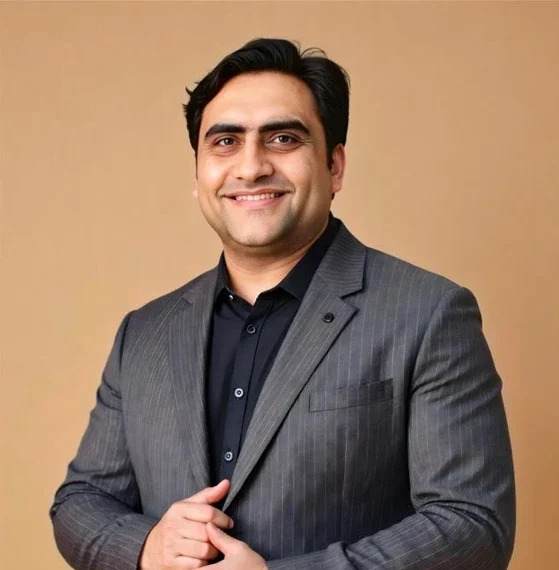
Sukh Sandhu: Building Systems That Protect Learners And Shape The Future Of Education
Sukh Sandhu’s journey into global education leadership did not begin in a boardroom or a university office. It began on a modest stage in Fatehabad, Haryana, where a young boy earned twenty rupees for a cultural dance performance. That early reward carried a powerful lesson. Effort matters. Knowledge has value. Showing up with commitment can change the course of a life.
Decades later, that same philosophy drives Sandhu’s work as Director of CAQA, Career Calling International, and Editor-in-Chief of VET Sector Magazine. Across his organizations, his mission remains consistent: to build education systems that genuinely serve learners, not just regulatory checklists. His story is not one of sudden success, but of steady construction. Each role, qualification, and risk has contributed to a larger vision of fairness, integrity, and measurable quality in education.
A Leadership Philosophy Rooted In Accountability And Service
Sandhu’s leadership style reflects both discipline and empathy. Having built his career across continents and cultures, he believes leadership is less about authority and more about stewardship.
He often emphasizes that education providers do not merely deliver courses. They shape lives, communities, and national skill bases. From this perspective, compliance is not a bureaucratic obligation but a public responsibility.
Sandhu’s philosophy is shaped by his experience working with the Australian Skills Quality Authority, where he saw how regulation could either protect learners or fail them. That experience led him to build organizations that help providers understand compliance not as fear-based oversight, but as structured support.
He has described his approach simply: organizations must create systems that make quality inevitable, not accidental. To him, the role of a leader is to design those systems and ensure they endure beyond individual careers.
This focus on durability explains why he places strong emphasis on governance frameworks, training ecosystems, and repeatable processes. His leadership is not about short-term wins. It is about building structures that continue to function when leadership changes.
Innovation Through Systems Thinking And Artificial Intelligence
While Sandhu is deeply rooted in regulatory integrity, he is equally focused on innovation. Through his work at CAQA and its AI initiatives, he is exploring how technology can reduce administrative burdens while improving accountability.
He views artificial intelligence not as a replacement for human judgment but as a tool for consistency and transparency. AI-assisted compliance systems can help providers monitor risks, automate documentation, and identify quality gaps before they become regulatory failures.
His organizations also work across higher education governance, accreditation systems, and international education compliance. Through the Australian Higher Education Group, he supports universities and training providers in strengthening academic governance and institutional design.
Sandhu’s innovation strategy rests on one core idea: technology should reduce fear and increase clarity. When systems become transparent and predictable, educators can focus on teaching rather than paperwork. That shift, he believes, is where real educational transformation begins.
Challenges, Turning Points, And The Courage To Build Independently
Sandhu’s career has not followed a predictable corporate ladder. Instead, it resembles what he describes as a mosaic of experiences.
One of the defining turning points came when he chose to launch his first business while still in college. That decision shaped his entire professional identity. It confirmed that he was not meant to operate within existing frameworks but to design new ones.
Later, leaving a stable regulatory role to build his own compliance consultancy represented another major risk. It required confidence in both his expertise and his principles. Yet it allowed him to align his work directly with his mission to protect learners and support ethical providers.
The challenges that followed were not small. Sandhu has navigated shifting regulations, legal disputes over intellectual property, and complex regulatory negotiations. These experiences reinforced his belief that integrity must be defended consistently, not selectively.
Despite the pressures of the compliance sector, he finds motivation in moments of transformation. When a training provider moves from anxiety to confidence during an audit preparation process, he sees the practical value of his work. Those outcomes, he says, matter more than awards or titles.
A Vision Focused On Longevity And Sector Transformation
Sandhu’s current professional chapter centers on what he calls “building what lasts.” His doctoral research at Golden Gate University explores new theoretical approaches to compliance, aiming to reshape how the field understands quality assurance and institutional accountability.
He believes the next era of education governance will rely on structured dialogue between regulators, providers, and communities. Compliance will no longer be a reactive exercise. Instead, it will become embedded in everyday educational practice.
Through his editorial leadership at VET Sector Magazine, Sandhu also contributes to shaping sector conversations. By documenting policy shifts, institutional innovations, and workforce trends, he seeks to create a shared knowledge base for educators and policymakers alike.
His broader vision is not limited to Australia. He sees global education systems moving toward greater transparency, technology integration, and learner-centered accountability. His organisation’s aim is to support that transition by offering scalable governance models that can adapt across countries and sectors.
Human Impact Beyond Professional Achievement
Despite an extensive list of global recognitions, Sandhu defines success in deeply personal terms. He speaks openly about arriving in Australia from India with determination rather than resources, and about building both a career and a family grounded in shared values.
His wife, Raj Kiran Kaur Sandhu, a nurse practitioner and academic at RMIT University, shares his commitment to service. Together, they have raised two children whose achievements in leadership, academics, and discipline reflect the family’s emphasis on education and cultural pride.
Beyond his professional work, Sandhu maintains a strong creative identity. He has written tens of thousands of poems and hundreds of stories, seeing writing as a way to remain grounded and reflective. His involvement in broadcasting, including work with Radio Haanji and participation in entertainment media linked to Star Plus and Disney India’s Nach Baliye, reflects his commitment to cultural connection and storytelling.
These creative pursuits are not distractions from his career. They are what sustain it. They allow him to remain connected to the human experiences that education ultimately serves.
A Legacy Built On Opportunity And Learning
Sandhu’s advice to emerging professionals reflects the same urgency that defined his own path. He encourages people not to wait for readiness or permission, but to act with commitment and curiosity.
He often emphasises the value of continuous learning. His multiple postgraduate qualifications across law, business, technology, and education were not pursued for prestige alone. Each discipline, he notes, expanded his ability to understand complex systems and lead effectively across sectors.
He also believes adversity is a powerful teacher. Regulatory conflicts, legal challenges, and institutional resistance have shaped his leadership far more than smooth success ever could.
Above all, Sandhu stresses the importance of remembering one’s origins. For him, the values instilled in his upbringing remain the foundation of every professional decision he makes. Purpose, he believes, is not defined by titles but by the principles one refuses to compromise.
Sukh Sandhu’s career demonstrates how persistence, knowledge, and principled leadership can shape an entire sector. His work sits at the intersection of policy, technology, and human aspiration, where education systems either enable opportunity or restrict it.
By focusing on durable systems rather than temporary recognition, Sandhu continues to influence how institutions approach compliance, governance, and learner protection. His journey, from a small stage in Haryana to international education leadership, illustrates a simple but powerful truth. Real impact is built patiently, one structure at a time.